Webflow
February 11, 2026


Explore our blog for inspiration, updates, and expert tips. We share stories that matter and spark curiosity.
.webp)
February 11, 2026
Artificial intelligence is transforming how businesses manage websites, create content, and scale digital marketing efforts. At the same time, Webflow has become one of the most powerful no code platforms for building high performance, design driven websites. When these two technologies work together, they create a highly efficient system that reduces manual effort and accelerates growth. This is where the Webflow connector in Claude becomes incredibly valuable.
By integrating Claude with Webflow, businesses can automate structured content workflows, manage CMS collections intelligently, and streamline website updates without disrupting design integrity. Instead of copying content manually between platforms, teams can directly generate, optimize, and publish content inside Webflow. In this detailed guide, you will learn how the Webflow connector works, how to set it up, key use cases, best practices, security considerations, and how it benefits businesses working in webflow development environments.
The Webflow connector is an integration that allows Claude to securely interact with your Webflow project through API access. Webflow provides a structured API that enables external tools to read, create, update, and manage CMS data. Claude uses this API to perform intelligent actions inside your Webflow project based on your instructions.
Instead of functioning as a separate content writing tool, Claude becomes connected directly to your Webflow CMS. It can access collections such as blog posts, products, case studies, landing pages, and FAQs. It works within structured fields including title, slug, meta description, rich text content, categories, images, and custom fields.
This structured interaction ensures that automation does not break your design layout or CMS architecture.
Publishing blog posts, landing pages, or product updates manually takes time. With the connector, Claude can generate content, format it correctly, and insert it directly into CMS collections. This speeds up publishing cycles significantly.
Claude can analyze meta titles, descriptions, and heading structures, then optimize them for search performance. This allows teams to improve rankings without reviewing every page manually.
By defining brand tone guidelines in prompts, businesses can ensure consistent voice across all pages. This is especially useful for agencies handling multiple clients.
Manual updates increase the risk of formatting mistakes, missing fields, or inconsistent naming conventions. Automated structured updates reduce these risks.
For teams working in webflow development, the connector reduces repetitive CMS tasks so developers can focus on performance optimization and advanced functionality.
The integration works through secure API authentication. Here is a simplified overview of the process:
Claude interacts only with the fields and permissions you allow. It cannot modify design elements in the Webflow Designer interface unless specific API capabilities support it. This ensures structured control over automation.
Before connecting Claude, organize your CMS collections clearly. Ensure that fields are properly labeled and SEO fields such as meta title and meta description are included.
A well structured CMS improves automation accuracy.
Inside your Webflow dashboard:
• Open Project Settings
• Navigate to Integrations
• Generate a new API token
• Copy and store it securely
This token provides authenticated access to your project.
In Claude’s integration settings:
• Select the Webflow connector
• Paste the API token
• Choose the correct site
• Assign collection permissions
After authentication, Claude can begin interacting with your CMS.
Be specific about your objectives. For example:
• Create weekly SEO optimized blog posts
• Update all product meta descriptions
• Refresh outdated content
• Generate FAQs for service pages
Clear instructions produce better automation results.
Always test new workflows in draft mode before publishing live updates. Review content for tone, formatting, and accuracy.
Claude can generate blog drafts based on target keywords, insert them into CMS collections, populate SEO fields, and save them as drafts for review. This ensures a consistent publishing schedule without overwhelming your team.
For ecommerce sites, updating dozens or hundreds of products manually is time consuming. Claude can rewrite descriptions in bulk, maintain formatting consistency, and improve clarity.
Claude can identify missing metadata, optimize title length, refine descriptions, and improve heading structure to enhance search visibility.
The connector allows Claude to retrieve existing CMS content and evaluate readability, keyword distribution, and formatting quality. It can suggest improvements or apply structured updates.
Claude can analyze service pages and generate relevant FAQs that can be inserted directly into a dedicated CMS collection.
Instead of vague instructions like improve this content, use detailed prompts such as rewrite meta description under 155 characters including primary keyword naturally.
Grant access only to the collections required for automation. This improves security and reduces risk.
AI generated content should always be reviewed for accuracy and brand alignment.
Use draft status first. Implement a review checklist before publishing.
Track metrics such as publishing speed, ranking improvements, and error reduction to measure success.
When integrating AI with your CMS, security is essential.
Follow these guidelines:
• Keep API tokens private
• Rotate tokens periodically
• Avoid granting full administrative access
• Monitor activity logs
• Use staging environments for testing
If you suspect a security issue, revoke and regenerate the API token immediately.
For companies operating as a webflow development agency, this integration creates strong operational advantages. Agencies can manage multiple client websites more efficiently, automate repetitive content tasks, and improve turnaround times.
Instead of spending hours updating CMS entries manually, teams can focus on strategic growth, performance optimization, and user experience improvements. This increases client satisfaction and profitability without significantly expanding team size.
While the Webflow connector is powerful, it does not replace strategic thinking or design expertise. It cannot:
• Redesign layouts automatically
• Replace conversion strategy planning
• Guarantee SEO rankings
• Validate factual accuracy without human review
AI should enhance workflows, not eliminate professional oversight.
As AI technology evolves, integrations like the Webflow connector will become more intelligent. We may see:
• Real time performance based content updates
• Automated A B testing suggestions
• Dynamic personalization
• Predictive SEO enhancements
• Smarter content refresh triggers
Businesses that adopt AI integrated workflows early will gain competitive advantages in efficiency and scalability.
The Webflow connector in Claude represents a major step forward in intelligent website management. By connecting AI capabilities directly to structured CMS systems, businesses can automate content creation, optimize SEO, and reduce manual workload without compromising design integrity. This integration empowers teams to work faster while maintaining control and consistency.
Whether you manage a content driven website or operate within webflow development services, leveraging this connector can significantly improve operational efficiency. With proper setup, clear workflows, and responsible oversight, the Webflow connector in Claude becomes a strategic asset for building scalable, high performance digital experiences.
.webp)
February 11, 2026
Webflow has emerged as one of the most powerful website development platforms for modern businesses. It offers unmatched design flexibility, robust content management capabilities, responsive performance, and clean code output. From startups to enterprise level organizations, companies across industries are choosing Webflow to build scalable, high performance websites that combine visual excellence with technical strength. As the platform continues to grow in popularity, the demand for certified and experienced Webflow partners in India has significantly increased.
Choosing a Webflow Premium Partner India agency ensures that your website is built by professionals who understand advanced Webflow capabilities, structured CMS architecture, responsive frameworks, performance optimization, and marketing integration. These agencies are known for delivering high quality Webflow projects aligned with business goals, conversion strategies, and long term scalability. In this detailed guide, we explore leading Webflow Premium Partner agencies in India, highlighting their location, expertise, strengths, services, and industry focus in equal depth.
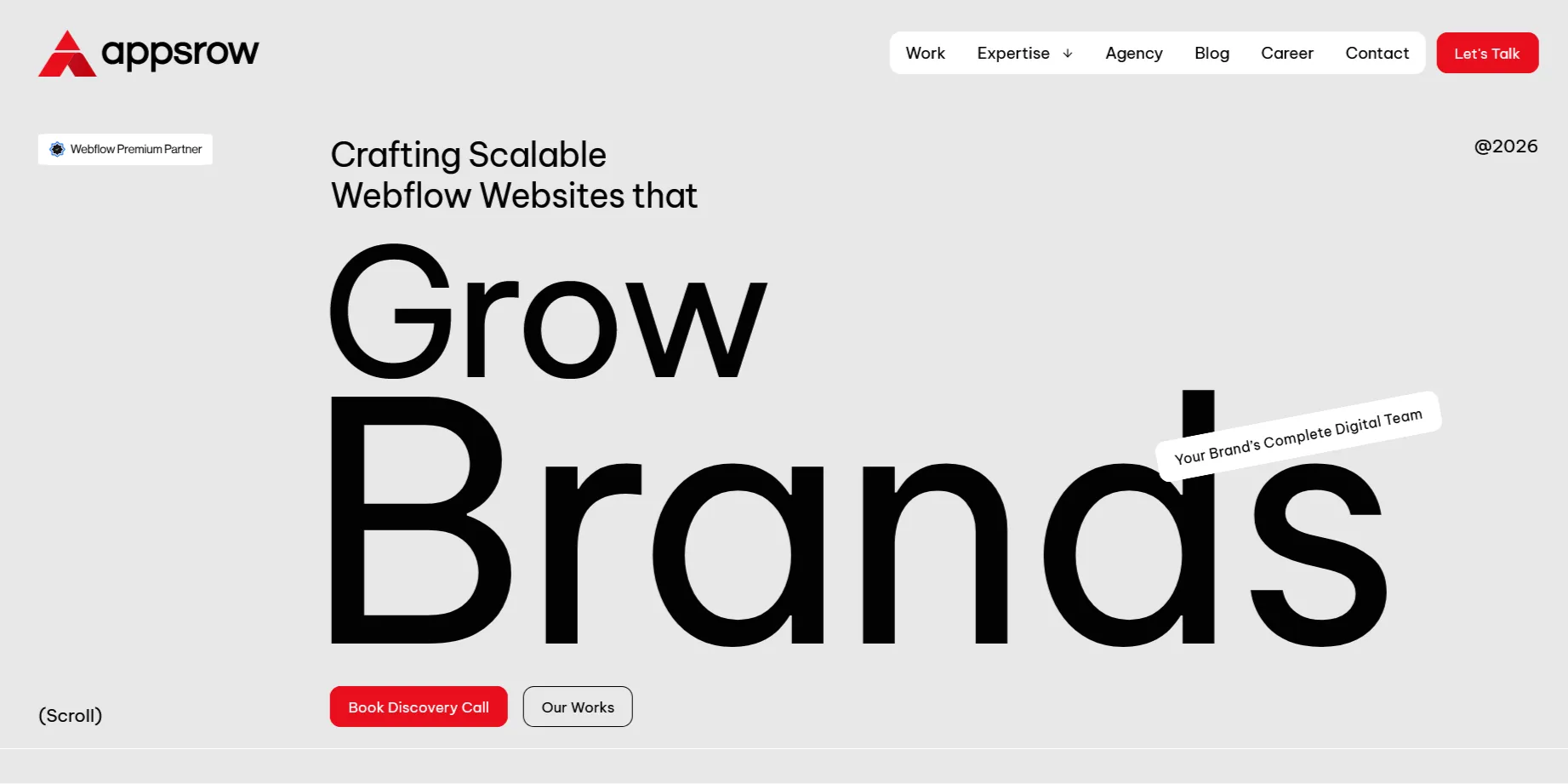
Appsrow is positioned as a strategic Webflow Premium Partner India agency known for delivering structured, scalable, and performance driven Webflow solutions. The agency focuses on building websites that are not only visually impressive but also technically optimized for growth, lead generation, and long term digital expansion.
Appsrow specializes in custom Webflow website design and development tailored to business objectives. Their expertise includes advanced CMS architecture, dynamic content systems, scalable component structures, interaction design, animation implementation, and technical SEO optimization. They build modular design systems within Webflow that allow businesses to maintain visual consistency while expanding their digital presence over time.
The team works extensively on complex Webflow builds including SaaS websites, B2B corporate platforms, landing page ecosystems, and content driven portals. They also implement CRM integrations, automation tools, analytics tracking systems, and marketing technology integrations directly within the Webflow framework.
Appsrow provides end to end Webflow services including discovery workshops, UX research, wireframing, UI design, Webflow development, CMS configuration, third party integration, website migration, performance optimization, and post launch support. They also offer ongoing Webflow maintenance and scalability planning.
One of the primary strengths of Appsrow is its structured development methodology. The agency follows a systematic approach from planning to deployment, ensuring that every project aligns with measurable business objectives. Their ability to combine user experience strategy with technical SEO and performance optimization makes them a strong choice for businesses seeking long term digital growth.
Appsrow serves SaaS companies, technology startups, fintech platforms, ecommerce brands, and professional service providers that require scalable Webflow solutions.
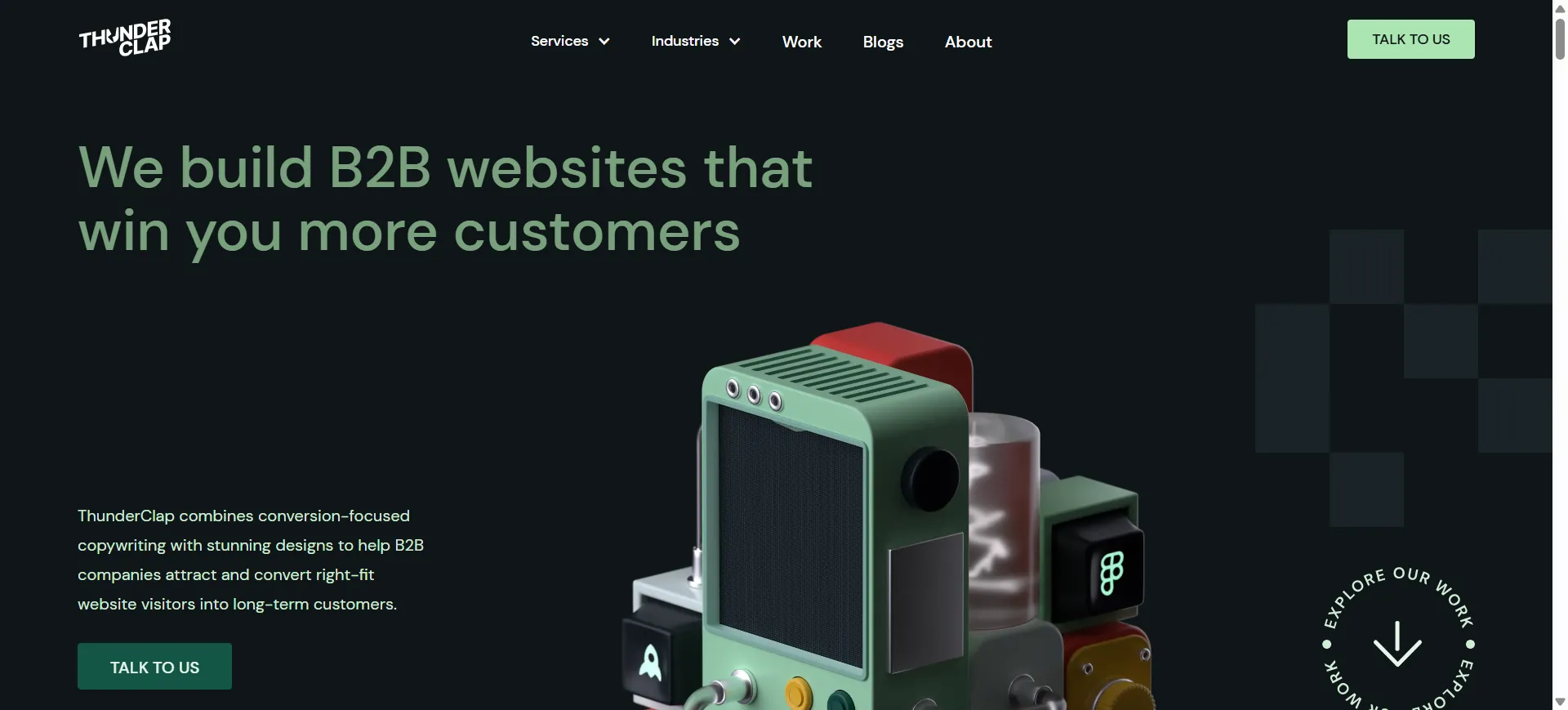
The ThunderClap is a design focused Webflow Premium Partner India agency recognized for creating visually immersive digital experiences. The agency emphasizes brand storytelling and visual engagement while maintaining technical precision within Webflow builds.
The ThunderClap excels in high end UI design, interaction design, and animation rich Webflow websites. Their expertise includes scroll based animations, layered transitions, interactive elements, and responsive design systems that maintain visual integrity across devices.
They approach Webflow projects with a strong emphasis on branding, ensuring that typography systems, color hierarchies, layout grids, and visual components reflect the brand personality. Their Webflow development integrates smooth navigation flows and clear conversion pathways.
Services include brand strategy workshops, UI and UX design, Webflow development, landing page creation, website redesign, CMS configuration, and website optimization. They also support campaign specific Webflow builds for product launches and marketing initiatives.
The key strength of The ThunderClap lies in its ability to merge brand strategy with Webflow development. Their websites often stand out visually while maintaining performance standards and structured backend organization.
They work with creative brands, SaaS startups, digital marketing companies, and enterprise level businesses looking for strong visual representation online.
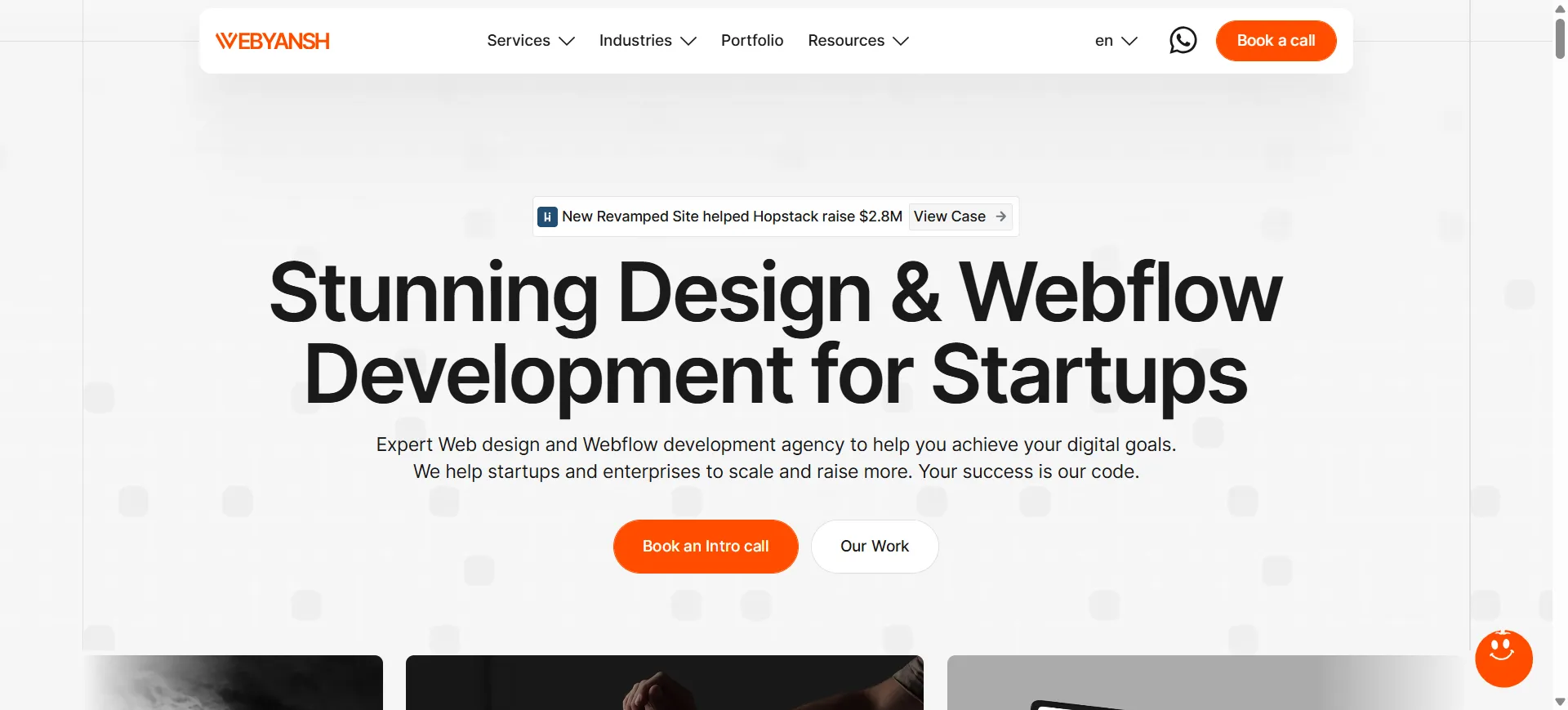
Webyansh is a growth oriented Webflow Premium Partner India agency known for integrating SEO strategy directly into Webflow development. The agency focuses on building search optimized and content ready websites that support organic traffic growth.
Webyansh specializes in SEO focused Webflow builds. Their expertise includes structured heading hierarchy, optimized metadata, internal linking architecture, schema readiness, image optimization, and performance enhancements within Webflow.
They design scalable CMS systems for blogs, knowledge bases, resource centers, and content marketing platforms. Their migration services help businesses move from other platforms to Webflow while preserving SEO value.
Webflow website development, SEO integration, website migration, CMS structuring, technical optimization, and analytics implementation are part of their service offerings.
Webyansh stands out for combining Webflow development with measurable search performance strategy. Their structured content architecture enables businesses to scale traffic over time.
They serve SaaS companies, ecommerce platforms, content heavy brands, and marketing driven organizations.
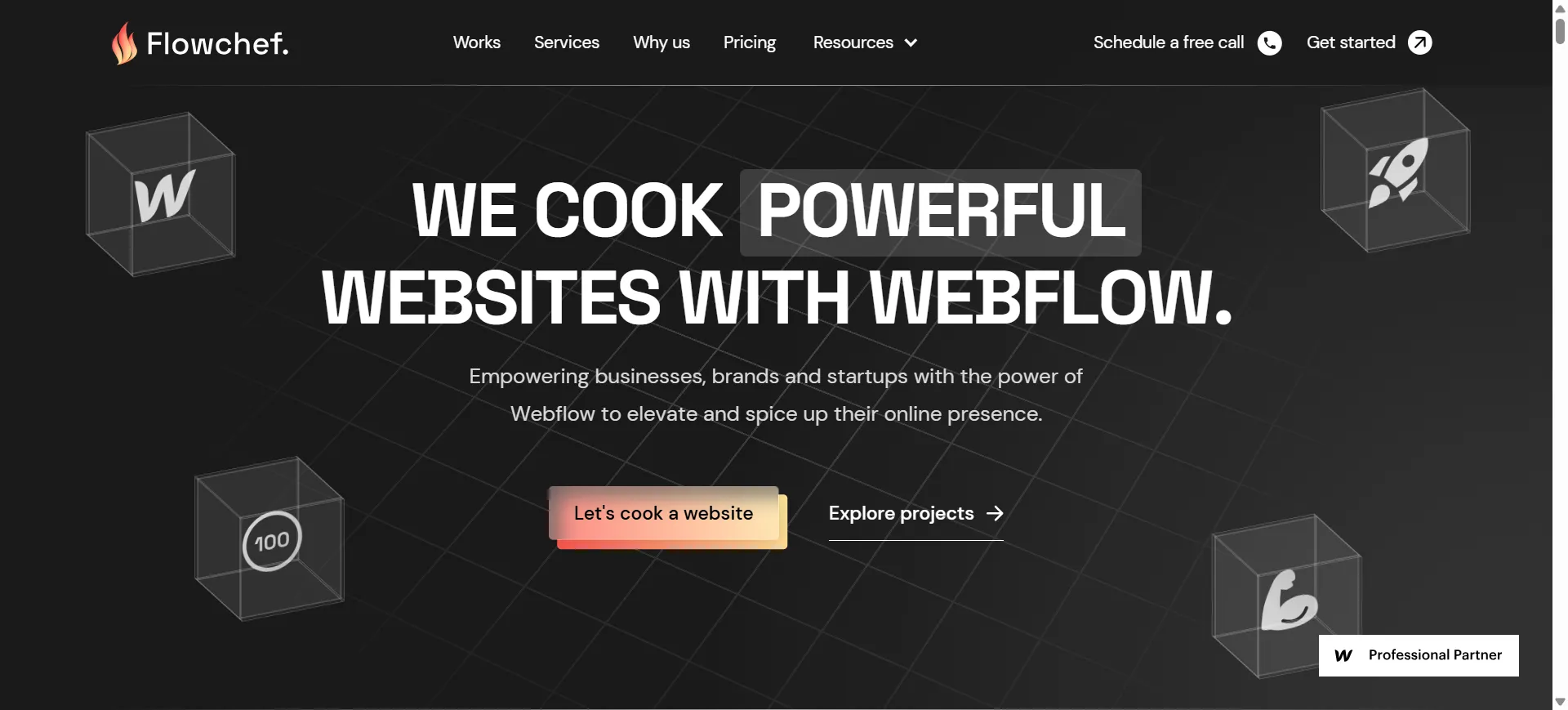
Flowchef is a Webflow Premium Partner India agency focused on delivering clean, performance oriented Webflow websites for startups and growing businesses.
Flowchef emphasizes efficient layout structures, clear navigation, and streamlined user journeys. Their Webflow builds are optimized for speed, usability, and clarity. They focus on simple yet effective design frameworks that prioritize user action.
The agency builds campaign landing pages, business websites, and CMS driven platforms with structured backend organization.
Their services include Webflow website design, landing page development, CMS setup, responsive optimization, and team training for content management.
Flowchef’s strength lies in delivering fast loading and conversion focused Webflow websites within structured timelines. Their clarity driven approach supports marketing performance.
They primarily work with startups, small businesses, and marketing focused teams seeking agile Webflow development.
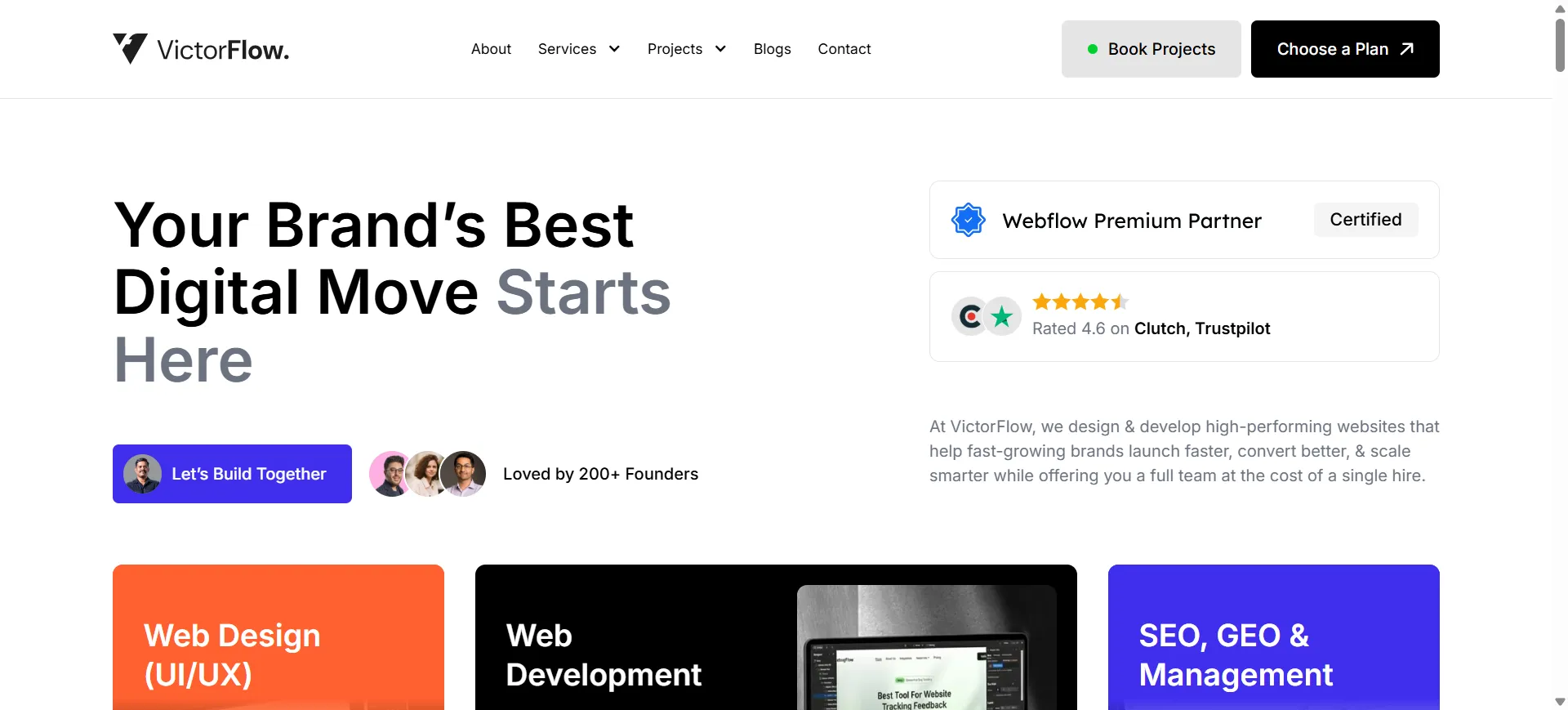
Victorflow is a Webflow Premium Partner India agency known for building structured and professional Webflow websites tailored for corporate and B2B brands.
Victorflow develops modular design systems within Webflow to ensure consistency and scalability. Their expertise includes CMS architecture, reusable components, structured design grids, and responsive frameworks.
They focus on corporate website design, SaaS platforms, and professional service websites that require credibility and polished presentation.
Services include Webflow website development, CMS configuration, UI design, corporate branding integration, and website optimization.
Victorflow’s strength lies in delivering structured and scalable Webflow builds that align with corporate standards and long term expansion strategies.
They serve B2B brands, SaaS companies, technology firms, and enterprise level organizations.
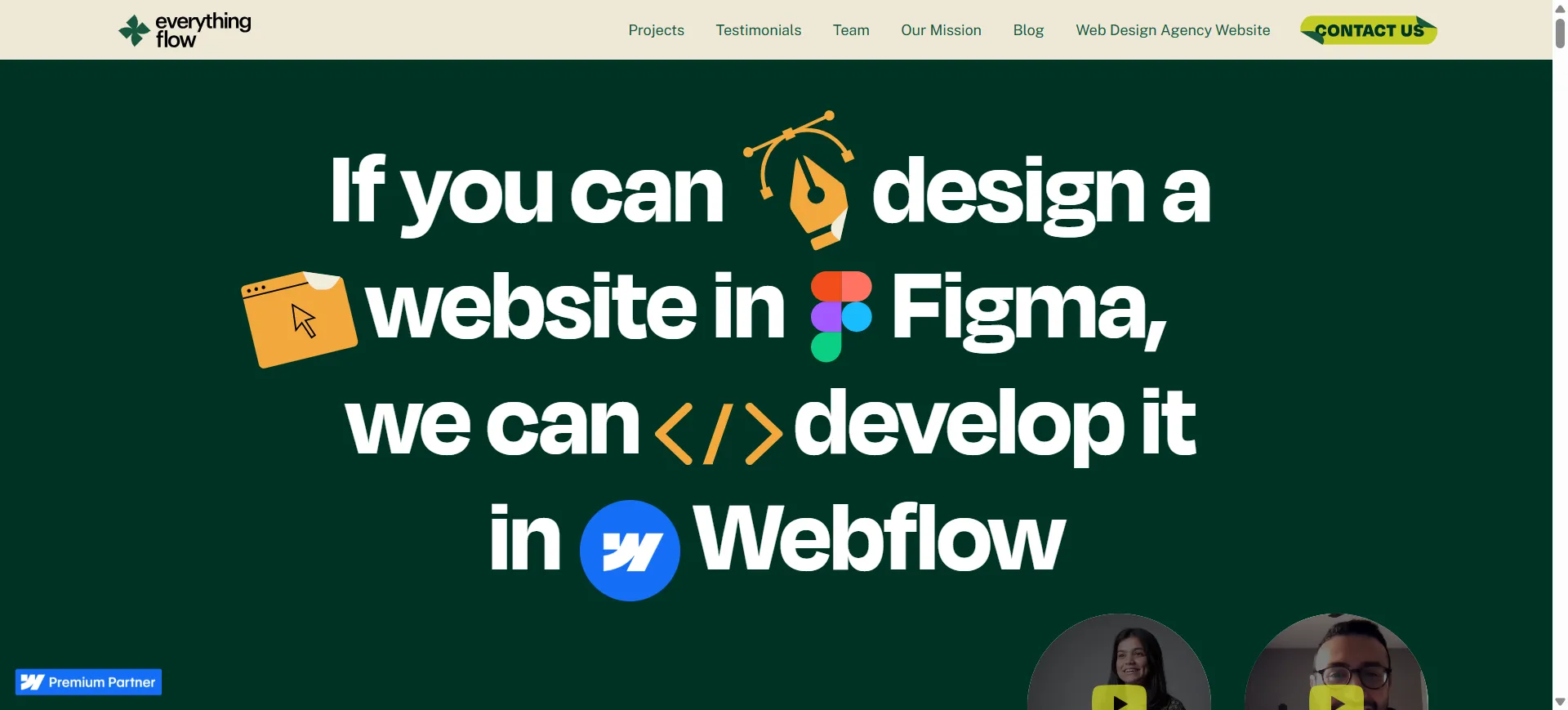
EverythingFlow is a creative and technically structured Webflow Premium Partner India agency that balances design innovation with backend organization.
The agency focuses on UX research, wireframing, UI systems, and component based Webflow development. They build reusable design elements to maintain scalability and consistency.
Everything Flow integrates marketing automation tools, analytics tracking systems, and lead capture frameworks into Webflow builds.
They provide Webflow website design, CMS configuration, integration services, redesign projects, and ongoing optimization support.
Everything Flow stands out for combining creative interface design with structured Webflow development processes that support long term website growth.
They work with startups, digital brands, SaaS companies, and growth driven organizations.
A Webflow Premium Partner India agency is a recognized Webflow expert company that demonstrates strong expertise in Webflow development, structured CMS implementation, performance optimization, and professional project execution.
Hiring a Webflow Premium Partner India ensures your website is built using best practices in design structure, responsiveness, scalability, and SEO optimization.
Evaluate their portfolio, experience in your industry, technical expertise, CMS structuring capabilities, and long term support services.
Yes. Many Webflow Premium Partner India agencies handle enterprise websites, SaaS platforms, and scalable digital ecosystems
Most agencies offer maintenance, performance monitoring, CMS updates, and scalability services post launch.
Selecting the right Webflow Premium Partner India agency is a strategic investment in your digital growth. A well structured Webflow website is more than a design project. It is a scalable business asset that supports marketing performance, lead generation, brand credibility, and long term expansion. Certified Webflow partners in India bring expertise in CMS architecture, responsive frameworks, performance optimization, and technical execution that ensures your website performs at its highest potential.
Whether you are a startup building your first scalable website, a SaaS company seeking conversion focused architecture, or an enterprise brand looking for structured digital transformation, partnering with an experienced Webflow Premium Partner India agency can significantly accelerate your growth journey. Each agency listed above offers unique strengths, allowing businesses to select a partner that aligns with their goals, industry, and technical requirements.
February 4, 2026
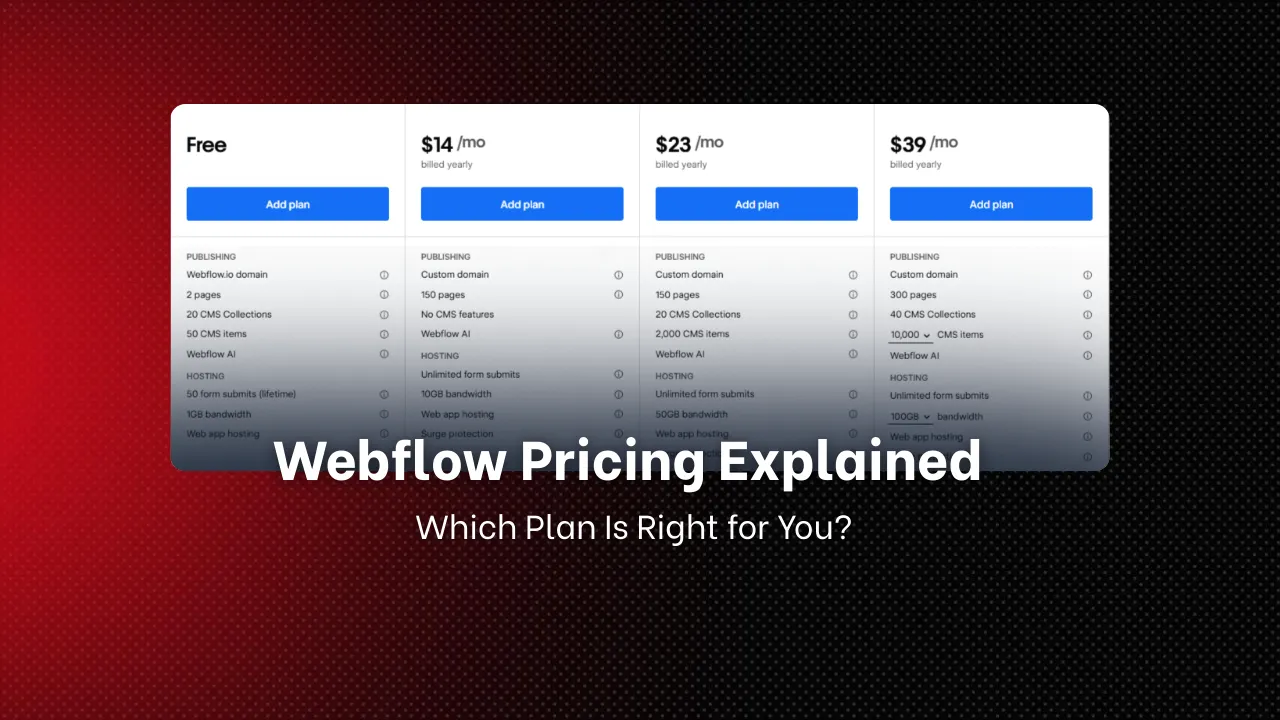
Webflow has become one of the most powerful website building platforms for businesses that want complete design freedom without sacrificing performance or scalability. Unlike traditional website builders, Webflow combines visual design tools, a robust content management system, and enterprise grade hosting in a single platform. This makes it especially attractive for startups, growing companies, and digital teams that want more control over their online presence.
Despite its popularity, Webflow pricing is often misunderstood. Many users struggle to choose the right plan because Webflow offers multiple pricing layers, each designed for different use cases. Selecting the wrong plan can result in unnecessary costs or limitations that impact future growth.
This blog explains Webflow pricing in detail. You will learn how Webflow plans work, what each plan includes, and which option is best for your business goals. By the end, you will have complete clarity on how to choose a plan that fits your needs today and supports your growth tomorrow.
Webflow pricing is divided into two main categories. Understanding this structure is essential before selecting a plan.
Site plans are applied to individual websites. These plans include hosting, bandwidth, CMS capacity, traffic handling, and ecommerce functionality. A site plan is required when you want to publish a website on a custom domain.
Workspace plans are designed for individuals, freelancers, teams, and agencies. These plans control how many projects you can create, how teams collaborate, and how websites are handed off to clients.
In many cases, businesses use a combination of both. For example, a company may use a workspace plan for collaboration and a site plan for publishing the final website.
Webflow site plans are ideal for businesses that want reliable hosting, strong performance, and flexible content management.
The Basic plan is designed for static websites that do not require dynamic content or a CMS.
- Custom domain hosting
- SSL security
- Fast global hosting
- Up to 150 static pages
- Limited form submissions
- Personal websites
- Simple business websites
- Landing pages
- Portfolio sites
- No CMS functionality
- Not suitable for blogs or frequently updated content
The Basic plan is best when content changes are minimal and dynamic features are not required.
The CMS plan is one of the most commonly used Webflow plans and is ideal for content driven websites.
- Dynamic content collections
- Up to 2000 CMS items
- Advanced SEO controls
- Higher traffic capacity
- Custom domain and hosting
- Blogs and resource centers
- Service based business websites
- Marketing focused websites
- Content heavy company sites
- No ecommerce functionality
- CMS item limit may restrict large publishers
This plan is ideal for businesses that rely on content marketing and SEO as growth channels.
The Business plan is designed for websites that experience high traffic or rapid growth.
- Up to 10000 CMS items
- High bandwidth limits
- Advanced performance optimization
- Priority support
- Enterprise level hosting
- High traffic websites
- Fast growing startups
- Large content platforms
- Media and publishing websites
The Business plan offers scalability and stability for companies that cannot afford downtime or performance issues.
Webflow ecommerce plans are built for businesses selling products online. These plans include storefront management, checkout features, and payment processing.
The Standard plan is designed for small ecommerce stores.
- Up to 500 products
- Custom checkout experience
- Integrated CMS product management
- No additional transaction fees from Webflow
This plan is suitable for small brands and startups entering ecommerce.
The Plus plan supports growing ecommerce businesses.
- Up to 1000 products
- Advanced shipping rules
- Abandoned cart recovery
- Higher monthly order limits
This plan works well for brands that are scaling their online sales.
The Advanced plan is built for large ecommerce operations.
- Up to 3000 products
- High order volumes
- Advanced integrations
- Enterprise level performance
This plan is best for established ecommerce businesses with consistent sales volume.
Workspace plans are ideal for professionals building and managing multiple websites.
This is a free plan designed for learning and experimentation.
- Beginners
- Students
- Testing Webflow features
The Core plan is suitable for freelancers and small teams.
- More project slots
- Basic collaboration tools
- Client ready workflows
The Growth plan is designed for professional teams.
- Unlimited projects
- Advanced collaboration
- Improved client management
The Agency plan is built for professional teams and agencies.
- Team permissions
- White labeling
- Client handoff tools
- Advanced billing options
Many businesses working with a Webflow development agency prefer this plan due to its scalability and client management capabilities.
A Basic or CMS site plan paired with a Starter or Core workspace plan is usually sufficient.
A CMS or Business site plan provides the flexibility needed for growth and content marketing.
Choose an ecommerce plan based on product count and expected sales volume.
A Growth or Agency workspace plan combined with appropriate site plans is the most scalable option. Many companies collaborate with a Webflow development agency to ensure the setup aligns with long term business goals.
- Start with the minimum required plan
- Upgrade only when limits are reached
- Choose annual billing to reduce costs
- Regularly review unused features
- Consult a Webflow development agency when planning large scale migrations
- Overpaying for unused CMS capacity
- Choosing a Business plan too early
- Ignoring ecommerce product limits
- Misunderstanding workspace versus site plans
Webflow may seem expensive compared to basic website builders, but it replaces multiple tools including hosting, CMS, security, and performance optimization. For businesses focused on scalability, design control, and long term value, Webflow delivers a strong return on investment.
Working with a Webflow development agency can further improve efficiency by reducing setup errors and ensuring the platform is used to its full potential.
Webflow pricing is flexible and powerful when understood correctly. The key to choosing the right plan is aligning your current needs with future growth rather than selecting the most expensive option upfront.
Whether you are building a simple website, managing a content platform, or scaling an ecommerce store, Webflow offers a plan that fits your goals. With careful planning and the right expertise, Webflow can serve as a long term foundation for your digital presence.
February 4, 2026
A website is no longer just a digital presence. It is a business tool that builds trust, communicates value, and converts visitors into customers. Modern users expect websites to load quickly, work seamlessly on all devices, look visually polished, and be easy to navigate. At the same time, businesses want websites that are simple to manage, scalable, and optimized for search engines.
In the past, creating such websites required separate tools for design, development, content management, hosting, and security. This often resulted in higher costs, longer timelines, and ongoing technical challenges. Webflow was created to simplify this entire process while still delivering professional quality websites.
Webflow is a modern web design and development platform that allows users to visually build responsive websites without manually writing code. Behind the scenes, it generates clean HTML, CSS, and JavaScript that follow modern web standards. This makes Webflow suitable for beginners who want ease of use as well as professionals who demand flexibility and performance.
This guide explains Webflow in detail, including how it works, its features, advantages, limitations, SEO capabilities, pricing considerations, and when working with a professional webflow development agnecy makes sense. By the end of this article, you will have a complete understanding of Webflow and its role in modern website creation.
Webflow is a visual website building platform that combines design, development, content management, and hosting into a single ecosystem. Unlike traditional website builders that rely heavily on pre designed templates, Webflow allows users to create custom layouts with full control over structure and styling.
What makes Webflow different is that it is built on real web technologies. Every element created in Webflow corresponds to actual HTML elements, and every style applied maps to real CSS properties. This means websites built with Webflow are not simulated or proprietary layouts but real websites that follow industry standards.
Because of this approach, Webflow sits between no code tools and traditional development. It removes the need to manually write code while still producing professional grade output.
Webflow works by translating visual design actions into production ready code. When a user adds a section, heading, image, or button, Webflow generates the appropriate HTML markup. When spacing, colors, typography, or alignment are adjusted, Webflow applies corresponding CSS rules.
This process allows users to focus on design and structure while Webflow handles the technical implementation. The platform also supports responsive design by default. Users can customize how elements behave on desktop, tablet, and mobile screens, ensuring a consistent experience across devices.
Because Webflow follows responsive web principles, websites adapt naturally to different screen sizes without the need to create separate versions.
Webflow consists of several interconnected parts that together form a complete website solution.
The Designer is the primary workspace where websites are built. It allows users to structure pages, control layouts, manage spacing, apply styles, and create reusable components. Unlike simple drag and drop editors, the Designer gives precise control over layout behavior using modern layout systems.
This makes it possible to create both simple websites and complex multi page layouts with consistency and accuracy.
The Webflow CMS is designed for managing dynamic content. Users can create content types for blogs, services, portfolios, case studies, testimonials, or team members. Each content type can have custom fields tailored to specific needs.
Once a CMS template is designed, all content items automatically follow the same layout. This allows websites to scale content without redesigning individual pages.
The Editor is built for content updates. It allows non technical users to edit text, images, and CMS content directly on the live website. Design and structure remain protected, reducing the risk of accidental layout changes.
This is especially valuable for businesses with marketing or content teams that need frequent updates.
Webflow hosting is fully managed and optimized for performance. It includes secure infrastructure, global content delivery, automatic SSL, and scalable resources. Website owners do not need to manage servers or handle security updates manually.
One of Webflow’s strongest advantages is the level of design control it offers. Users can manage spacing, alignment, typography, colors, backgrounds, and positioning at a detailed level. This allows designers to create unique brand focused websites rather than relying on generic templates.
Layouts can be built using modern design principles that ensure consistency and responsiveness. Reusable components help maintain uniformity across pages while saving time.
This level of control makes Webflow especially appealing for businesses that want a strong visual identity.
Responsive design is essential in today’s multi device world. Webflow includes responsive controls that allow designers to adjust layouts and styles for different screen sizes.
Elements can be resized, repositioned, or hidden based on device type. This ensures that content remains readable and usable on mobile phones, tablets, and desktops.
Because these adjustments follow responsive design rules, the website remains clean and maintainable.
Webflow includes built in tools for creating animations and interactions without writing JavaScript. Designers can add scroll based animations, hover effects, page transitions, and subtle motion that enhances user engagement.
When used thoughtfully, these interactions help guide users, highlight important content, and create a polished experience. Webflow also allows control over timing and triggers to ensure animations do not negatively impact performance.
Performance is a key factor in user experience and search engine rankings. Webflow generates clean, semantic code that loads efficiently. Images are optimized automatically, and assets are delivered through a global content delivery network.
Because Webflow handles hosting and optimization internally, websites typically perform well without additional configuration. This reduces the need for third party performance tools.
As websites grow, managing content becomes more complex. Webflow CMS is designed to support growth without increasing technical complexity.
Businesses can add new content items easily while maintaining consistent design. Content relationships allow advanced structures such as categories, tags, and references. This is especially useful for blogs, resource centers, and content heavy websites.
The separation between content and design ensures long term scalability.
Webflow includes built in SEO features that support strong search visibility. Users can customize page titles, meta descriptions, URLs, image alt text, and social sharing settings.
The platform automatically generates XML sitemaps and supports redirects, making it suitable for site migrations. Fast loading speeds and mobile responsiveness further improve SEO performance.
When implemented strategically by a webflow premium agnecy, Webflow can serve as a strong foundation for long term organic traffic growth.
Webflow pricing is structured around site plans and workspace plans. Site plans are required to publish websites and are based on traffic, CMS item limits, and features. Workspace plans support collaboration and multi project management.
Although Webflow may have higher upfront costs than basic builders, it often reduces long term expenses by eliminating plugins, third party hosting, and maintenance overhead.
Webflow simplifies website creation by combining multiple tools into one platform. It offers fast performance, strong security, and modern design capabilities. Websites require minimal maintenance and are easier to scale over time.
For businesses focused on branding, efficiency, and growth, Webflow offers significant advantages over traditional platforms.
Webflow is not ideal for every project. It has a learning curve and requires an understanding of layout concepts. It is also less suitable for very large ecommerce stores compared to specialized ecommerce platforms.
Additionally, CMS and hosting features are tied to Webflow’s ecosystem. These limitations can be managed effectively with proper planning or by working with an experienced webflow development agnecy.
Hiring a Webflow agency is beneficial when building custom websites that require strategic design, advanced CMS logic, or performance optimization. Agencies bring expertise in user experience, SEO, and conversion focused design.
They are particularly valuable for business critical websites and complex redesign projects.
Webflow is an excellent choice for businesses that want modern, high performance websites with full design control and minimal maintenance. It works well for marketing websites, SaaS platforms, content driven projects, and brand focused sites.
If your project requires heavy backend functionality or enterprise ecommerce features, other platforms may be more appropriate.
Webflow has changed how websites are built by combining visual design freedom with real code output and managed infrastructure. It empowers beginners to create professional websites and gives businesses a scalable, performance focused solution.
When used correctly, Webflow delivers fast, secure, and visually impressive websites that support long term growth. With the right strategy and execution, especially when supported by a professional webflow development agnecy, Webflow can become a powerful digital asset for any organization.
If you are looking for a future ready website platform that balances creativity, performance, and simplicity, Webflow is a strong choice.
January 30, 2026
Search engines are no longer simple tools that direct users to websites. In 2026, they function more like intelligent advisors that interpret questions, understand context, and deliver complete answers in real time. Users expect instant clarity, not a list of links. This transformation has quietly changed what success in search optimization really means. Visibility today is earned through relevance, trust, and depth rather than sheer rankings.
As artificial intelligence becomes the foundation of modern search experiences, businesses must adapt their SEO strategies to match this new reality. Concepts like AI search, Answer Engine Optimization, and zero click results are no longer optional trends but core components of digital growth. This blog explores how SEO is evolving in 2026, why traditional tactics are losing effectiveness, and how brands can build sustainable visibility in an environment where being cited matters more than being clicked.
Search has shifted from retrieval to reasoning. Earlier search engines matched keywords and returned pages based on technical signals. Modern AI powered engines analyze intent, context, historical behavior, and credibility before generating an answer. Instead of asking users to find information, search systems now deliver information directly.
This evolution has redefined competition. Businesses are no longer competing only for rankings but for inclusion in AI generated responses. Search engines now evaluate which sources deserve to be trusted, summarized, and referenced. This places a much higher value on accuracy, clarity, and subject matter expertise.
AI search engines rely on advanced language models and real time data interpretation. They process entire topics rather than isolated keywords. When a user asks a question, the system evaluates multiple trusted sources, extracts relevant insights, and generates a clear response.
For content creators and marketers, this means that fragmented content no longer performs well. Pages must provide complete explanations that address the topic holistically. AI search rewards content that demonstrates understanding rather than repetition.
Key characteristics of AI friendly content include logical flow, clear explanations, and factual consistency. Pages that answer questions directly while also offering deeper context are more likely to be referenced by AI systems.
In 2026, keyword density has little influence on performance when compared to intent alignment. Search engines understand language variations and synonyms naturally. They focus on what the user wants to achieve rather than the exact words used.
Modern SEO strategies begin with intent analysis. This includes understanding whether the user wants to learn, compare, evaluate, or make a decision. Content that aligns closely with a specific intent performs better than content that tries to target everything at once.
Instead of repeating keywords, successful pages use natural language, clear examples, and structured explanations. This approach improves both user experience and AI comprehension.
Answer Engine Optimization focuses on making content easy for AI systems to extract and present as direct answers. This is one of the most important SEO trends of 2026.
AI engines favor content that provides clear definitions, concise summaries, and logical breakdowns of complex ideas. Pages that start by answering a question clearly and then expand with supporting information perform especially well.
Effective Answer Engine Optimization includes structured headings, question based sections, and content that anticipates follow up queries. The goal is to make your content the most complete and reliable answer available.
Zero click searches have become a dominant pattern in informational queries. Users often receive answers directly on the search interface without visiting any website. While this may appear to reduce traffic, it creates new opportunities for brand visibility.
Being referenced in AI generated answers builds credibility and awareness. Even without a click, users remember the brands that consistently appear as trusted sources. Over time, this recognition influences buying decisions and brand preference.
Success in zero click environments requires a shift in mindset. SEO is no longer only about traffic volume but about influence and authority.
Shallow content struggles to survive in AI driven search. Search engines evaluate whether a page truly understands the topic or simply rephrases existing information.
In 2026, depth matters more than frequency. One well researched and comprehensive article can outperform dozens of generic posts. Content should explore topics from multiple angles, explain underlying concepts, and provide practical insights.
This approach not only improves search visibility but also strengthens brand trust. Readers are more likely to engage with content that feels thoughtful and informed.
Search engines increasingly evaluate the credibility of the brand behind the content. Consistency across platforms, clarity of messaging, and demonstrated expertise all contribute to authority signals.
This is why SEO and branding strategies are now deeply connected. Many companies work with a b2b branding agency to ensure that their positioning, voice, and expertise are clearly communicated across all digital touchpoints. Strong brand signals help AI systems determine which sources deserve visibility.
Brand authority is built over time through consistent value, not aggressive optimization tactics.
Modern search engines analyze multiple trust indicators. These include author expertise, topical consistency, content accuracy, and external references. Experience and real world knowledge are especially valuable signals.
Content written from a practical perspective often performs better than purely theoretical explanations. AI systems recognize patterns that indicate genuine understanding.
Transparency also matters. Clear explanations, logical structure, and factual accuracy all contribute to trustworthiness.
Content structure plays a critical role in SEO success. Well organized content helps AI extract information efficiently while also improving readability for users.
Effective structure includes descriptive headings, clear sections, and logical progression. Each section should focus on a single idea and build upon the previous one.
This structure improves engagement, reduces confusion, and increases the likelihood of being referenced in AI generated responses.
Search queries are becoming more conversational as voice search and AI chat interfaces grow. Users ask complete questions rather than typing short phrases.
Content that mirrors this natural language style performs better. Writing in a clear, conversational tone helps both users and AI systems understand the message.
This does not mean sacrificing professionalism. It means prioritizing clarity over complexity and explanation over jargon.
In 2026, branding plays a direct role in search visibility. Search engines recognize brands that demonstrate consistency, expertise, and trustworthiness across channels.
A strong branding agency helps businesses align messaging, visuals, and content strategy. This alignment strengthens authority signals and improves SEO performance over time.
Brand recognition also improves performance in zero click environments, where visibility matters more than immediate traffic.
Traditional metrics like rankings and traffic are still useful but no longer sufficient. Modern SEO measurement includes brand mentions in AI responses, inclusion in featured answers, and visibility across search interfaces.
Engagement quality and assisted conversions are also important indicators. SEO success is now measured by influence and impact rather than clicks alone.
Businesses that adapt their analytics approach gain a clearer understanding of their true search performance.
To succeed in 2026, businesses must rethink their SEO foundations. This includes focusing on intent driven content, building topical authority, and aligning SEO with brand strategy.
SEO is no longer a technical task handled in isolation. It is a strategic discipline that supports long term credibility and growth.
Organizations that invest in quality, clarity, and trust will remain visible even as search continues to evolve.
SEO in 2026 is defined by intelligence, context, and trust. Artificial intelligence has reshaped how information is discovered and delivered, shifting the focus from rankings to relevance. Businesses that continue to rely solely on outdated tactics will struggle to compete in an environment where answers are generated instantly and authority determines visibility.
The brands that win in this new era are those that understand search as a credibility engine rather than a traffic tool. By creating meaningful content, optimizing for answers, and strengthening brand authority, organizations can achieve lasting visibility even in zero click search environments. The future of SEO belongs to those who focus on being genuinely useful, consistently reliable, and deeply trusted.
January 30, 2026
Search engine optimization is no longer a single discipline. What once revolved around rankings, backlinks, and keywords has now expanded into a much broader system of visibility, authority, and interpretation. For years, traditional SEO helped businesses grow predictably by aligning content with how search engines indexed and ranked information. Appearing on the first page was the goal, and traffic was the reward.
As we move through 2026, that model has fundamentally changed. Search engines are no longer passive platforms displaying results. They are intelligent decision systems that analyze intent, summarize information, and present answers instantly. Users increasingly rely on AI driven search experiences that eliminate the need to click through multiple pages. This shift has elevated Answer Engine Optimization from an emerging concept into a critical strategy. Understanding the difference between AEO and traditional SEO is now essential for any business that wants to remain visible, trusted, and competitive.
The way people search today reflects how technology has reshaped expectations. Users want clarity, not choices. They ask complete questions, expect context aware responses, and trust systems that provide immediate understanding. Whether through AI summaries, voice assistants, or conversational interfaces, modern search experiences aim to reduce friction.
This transformation has changed the definition of success. Visibility is no longer measured only by rankings. It is measured by whether a brand’s information is selected, summarized, and presented as an answer. Traditional SEO alone was not designed for this reality. AEO exists specifically to meet it.
Traditional SEO was built for an earlier version of search. Its goal was to help web pages rank higher by aligning with known ranking signals.
Traditional SEO focuses on relevance, authority, and accessibility. Keyword research identifies what users search for. Content is optimized around those terms. Metadata, internal linking, and headers guide search engines through a page. Technical optimization ensures fast loading, mobile compatibility, and proper indexing. Backlinks reinforce trust and credibility.
This system worked because search engines primarily acted as indexes. They matched queries to pages and ranked them based on quality signals.
Despite the rise of AI driven search, traditional SEO remains important. It provides the technical and structural foundation that allows content to be discovered. Long form resources, educational content, and transactional pages still rely on SEO to surface in search results. Without strong SEO fundamentals, even well written content struggles to gain visibility.
The limitation of traditional SEO lies in its original assumptions. It assumes users will browse results, compare links, and click through to websites. In reality, many users now receive answers directly within search interfaces. AI generated summaries often satisfy intent instantly. As a result, ranking does not always translate into influence or engagement.
Answer Engine Optimization is the practice of creating and structuring content so that AI systems can easily interpret, extract, and present it as a direct answer to user queries. AEO is not focused on ranking pages. It is focused on resolving intent.
Modern search platforms evaluate content differently. They look for clarity, accuracy, and contextual relevance. AEO ensures that information is structured in a way that machines can confidently reference.
To understand AEO, it helps to understand how answer engines think.
- They analyze questions rather than keywords
- They assess credibility across an entire topic
- They prioritize consistency and factual accuracy
- They extract meaning from structure and language
- They reward content that reduces ambiguity
AEO aligns content with these evaluation patterns, making it more likely to be selected as a trusted source.
AI driven search experiences are now embedded across platforms. Users encounter answers through search engines, browsers, mobile devices, and voice assistants. In many cases, decisions are influenced before a website visit ever occurs.
This means brands must earn visibility earlier in the journey. AEO determines whether a brand is included in AI generated explanations, comparisons, and recommendations. Being present in answers builds authority even without direct traffic.
Traditional SEO begins with keyword demand. AEO begins with user intent. Instead of asking what terms people search for, AEO asks what problem they are trying to solve and what outcome they expect.
SEO content often prioritizes coverage and length. AEO content prioritizes understanding. Clear definitions, logical flow, and contextual explanations matter more than keyword repetition.
Traditional SEO measures success through clicks. AEO measures success through presence and trust. Influence now happens before engagement, shaping perceptions early.
AEO does not replace SEO. It extends it. SEO ensures that content can be discovered and indexed. AEO ensures that content can be understood and referenced.
When combined, they form a complete visibility strategy. SEO builds the foundation. AEO builds interpretation and trust.
Content must now be written with clarity as the primary goal. Complex ideas should be explained simply. Assumptions should be minimized. Language should reflect how people naturally ask questions.
AI systems favor content that explains concepts step by step and avoids unnecessary abstraction.
Effective AEO content follows a logical structure. Questions are addressed directly. Answers appear early in each section. Supporting context follows naturally. This structure benefits both readers and machines.
Structured data helps search engines understand relationships within content. Schema markup provides context around articles, organizations, and frequently asked questions. While structured data alone does not guarantee visibility, it improves interpretability when paired with high quality content.
B2B buyers conduct extensive research before engaging with vendors. Much of this research now occurs through AI mediated discovery rather than traditional browsing.
Answer based visibility influences which brands are perceived as credible, knowledgeable, and trustworthy. This is where alignment with a strategic B2b branding agency becomes essential, ensuring consistent authority, messaging, and positioning across AI driven environments.
Traditional SEO metrics still matter, but they are no longer sufficient on their own.
Modern visibility measurement includes:
- Presence in AI generated answers
- Brand mentions within summaries
- Voice search references
- Assisted conversions influenced by early exposure
Success is increasingly measured by influence rather than immediate traffic.
AEO is particularly effective for businesses offering complex or expertise driven solutions. Technology companies, SaaS platforms, professional services, healthcare providers, and fintech brands benefit from being recognized as authoritative sources.
Organizations investing in advanced AEO services gain a competitive advantage by shaping how AI systems understand and present their expertise.
Many businesses misunderstand AEO and approach it incorrectly.
- Some treat it as a technical shortcut
- Others focus only on snippets
- Some ignore accuracy and freshness
- Others separate branding from authority
AEO is not a tactic. It is a long term strategy rooted in trust.
Search engines are evolving into decision engines. AI systems will increasingly compare options, evaluate credibility, and recommend solutions without requiring users to visit multiple sites.
Brands that succeed in this environment will focus on education, expertise, and consistency. They will optimize content ecosystems rather than isolated pages.
The difference between AEO and traditional SEO reflects a broader transformation in how digital visibility works. Traditional SEO remains essential for discoverability and technical accessibility. AEO defines how brands are interpreted, trusted, and recommended by AI driven systems. In 2026, success is no longer about ranking alone. It is about being answer ready.
Businesses that integrate strong SEO foundations with AEO focused strategies gain lasting relevance, authority, and influence. As search continues to evolve, those who adapt now will shape how they are perceived in the future.
January 3, 2026
The modern digital landscape is fraught with anxiety for website owners. If you have ever managed a website built on a traditional open-source Content Management System (CMS) like WordPress, you are likely familiar with the "plugin panic." It starts with a notification that five plugins need updating. You hesitate, knowing that one wrong click could crash your site layout or break a critical integration. But you also know that ignoring the update leaves a gaping security hole that hackers are eager to exploit.
This catch-22 is the reality for millions of businesses. The reliance on third-party plugins to add basic functionality creates a fragile ecosystem where security is constantly at odds with stability. But what if you could stop worrying about updates altogether? What if your CMS was inherently secure, managed by a dedicated team of engineers, and immune to the vulnerability of third-party code injections?
Webflow has revolutionized the way we think about web design, but its most underrated feature isn't its visual canvas - it's its security architecture. By shifting from a plugin-dependent model to a managed, all-in-one platform, Webflow eliminates the vulnerabilities that plague traditional CMS platforms. In this deep dive, we will explore why you should stop worrying about plugin updates and how webflow development offers a fortress-like security environment for your business.
To appreciate the solution, we must first understand the problem. Traditional open-source platforms are powerful because they are extensible. If you need a contact form, you download a plugin. If you need SEO tools, you download another. If you need security, you ironically download a security plugin.
While this offers flexibility, it creates a massive attack surface.
Every plugin you install is a piece of code written by a third-party developer. In many cases, these are hobbyists or small teams who may not adhere to enterprise-level security standards. When you install a plugin, you are essentially giving that developer access to your site's infrastructure. If their code has a flaw, your entire site is compromised.
Software rots. As core CMS versions update (e.g., WordPress 6.x), plugin developers must update their code to remain compatible. If a developer abandons a plugin - which happens frequently - you are left with "zombie code" that becomes a prime target for automated bot attacks.
Even when a security patch is released for a popular plugin, there is a delay between the release and the moment you click "update." Hackers know this. They monitor changelogs, identify the vulnerability that was just fixed, and immediately scan the web for sites that haven't updated yet. This "patch gap" is where most hacks occur.
Webflow takes a fundamentally different approach. It is a SaaS (Software as a Service) platform, meaning it is a closed ecosystem. You don't download software to your server; you access the platform via the cloud. This shift in architecture changes the security responsibility model entirely.
In a traditional setup, security is your responsibility. In Webflow, security is their responsibility.
The most significant security benefit of Webflow is the absence of server-side plugins. In Webflow, the core functionalities - visual design, interactions, CMS database, and hosting - are native to the platform.
When you hire a webflow development agency to build your site, they aren't stitching together code from twenty different sources. They are building using Webflow's standardized, vetted tools. Because you cannot upload executable PHP code or server-side scripts to Webflow, the primary vector for malware injection (the "backdoor") simply does not exist. Hackers cannot exploit a contact form plugin to gain root access to your server because there is no plugin to exploit.
Webflow hosting is powered by Amazon Web Services (AWS) and Fastly. This isn't just about speed; it's about inheriting the security protocols of the world's largest cloud infrastructure.
When you host on a cheap shared server (common with WordPress), your site is effectively living in an apartment complex. If your "neighbor" (another site on the same server) gets hacked or spammed, your site can suffer collateral damage, such as being blacklisted or slowed down.
Webflow's infrastructure provides:
The title of this post promises that you can stop worrying about updates, and Webflow delivers on this promise through "Managed Security."
In the WordPress world, "Maintenance Mode" is a dreaded screen. It means the site is down while files are being overwritten. If the update fails, the site stays down. This fear leads many site owners to defer updates, leaving them vulnerable.
Webflow handles updates differently. Because it is a SaaS platform, updates happen continuously in the background without you ever noticing.
This "set it and forget it" aspect is a massive relief for marketing teams and business owners. It frees up mental bandwidth and budget that was previously allocated to maintenance retainers.
Secure Sockets Layer (SSL) is the technology that encrypts the link between a web server and a browser. It is what gives you the padlock icon in the address bar and the "HTTPS" prefix.
In the past, setting up SSL was a technical hurdle involving purchasing certificates, verifying domain ownership, and renewing keys annually. If you forgot to renew, your site would display a scary "Not Secure" warning to visitors, killing your credibility instantly.
Webflow includes free SSL certificates for every site hosted on its platform.
Distributed Denial of Service (DDoS) attacks are attempts to make an online service unavailable by overwhelming it with traffic from multiple sources. It's like a traffic jam clogging up a highway, preventing regular cars (your customers) from arriving at their destination.
For a standard self-hosted website, DDoS protection usually requires purchasing expensive third-party services like Cloudflare Enterprise or hoping your hosting provider has decent basic filtering.
Webflow has built-in DDoS protection. Because it utilizes AWS Shield and Fastly, it can absorb massive amounts of malicious traffic that would crash a standard dedicated server. These networks are designed to scrub traffic, identifying and blocking botnets while letting legitimate users pass through. This level of protection is typically only available to enterprise companies with large IT budgets, but Webflow democratizes it for every user.
Security isn't just about preventing hacks; it's about disaster recovery. What happens if a team member accidentally deletes a critical page? Or breaks the layout of your pricing table?
In traditional environments, restoring a backup can be a complex process involving FTP clients, database management tools (like phpMyAdmin), and a lot of prayer. If your backup plugin failed to run last night, you might be out of luck.
Webflow treats your website like a software product with robust version control.
.webflow.io staging domain. This allows you to test changes, design updates, and new content in a secure, non-public environment before pushing it to your live custom domain. This prevents "cowboy coding" on the live site, which is a major cause of site breakage.
Internal security threats are just as dangerous as external ones. A disgruntled employee or a careless contractor with weak passwords can do immense damage.
Webflow provides robust tools to manage who can access your site and what they can do.
Webflow supports 2FA for all accounts. This adds a critical layer of security, ensuring that even if a password is compromised (perhaps used on another site that was breached), the attacker cannot access the Webflow dashboard without the second verification step.
When working with a webflow development agency or internal marketing team, you don't want to give everyone "Admin" access. Webflow allows you to granularly control permissions.
The "Editor" mode is particularly powerful for security. It restricts content creators to a simplified interface where they can write blogs and update products, but they physically cannot access the code or design settings. This "least privilege" principle safeguards the structural integrity of the site.
For Enterprise clients, security is often a matter of legal compliance. If you are handling customer data, you need to prove that your vendors (including your CMS) are secure.
Webflow invests heavily in compliance certifications.
These certifications provide the documentation necessary for IT procurement teams to approve the platform, streamlining the adoption process for larger organizations.
While not a direct security feature like a firewall, the quality of code produced by Webflow contributes to a secure environment.
Plugins often introduce "code bloat" - unnecessary scripts and stylesheets that load on every page. This not only slows down the site (hurting SEO) but creates complex interactions that can lead to vulnerabilities.
Webflow generates clean, semantic HTML, CSS, and JavaScript. It exports W3C-compliant code. Clean code is easier to audit, easier to debug, and generally behaves more predictably than the spaghetti code often found in heavily plugged-in WordPress themes. Because the code is cleaner, the attack surface is smaller. There are fewer places for bugs to hide.
No system is 100% unhackable. Social engineering (tricking a user into giving up their password) remains a threat on any platform. However, the vectors of attack on Webflow are significantly reduced compared to open-source alternatives.
On a traditional CMS, the hacker attacks the software (plugins, themes, outdated PHP versions).
On Webflow, the hacker must attack the platform infrastructure itself.
Attacking Webflow's infrastructure means going up against AWS and a dedicated security team. Attacking a WordPress site means going up against a marketing manager who maybe forgot to update a plugin last month. The difficulty level for the attacker is exponentially higher with Webflow.
Transitioning to webflow development is not just a design decision; it is a strategic business decision.
When you remove the need for plugin updates, you are also removing:
The era of the "plugin patch" is ending. Businesses today require agility and reliability, not a constant to-do list of software maintenance. Webflow offers a paradigm shift where security is baked into the foundation of the platform rather than plastered on top via third-party extensions.
By leveraging enterprise-grade hosting, eliminating server-side vulnerabilities, and automating updates and backups, Webflow allows you to reclaim your time. You can stop looking over your shoulder for the next security breach and start looking forward to your next marketing campaign.
Whether you are a startup looking to scale or an enterprise seeking compliance, partnering with a webflow development agency to migrate your digital presence is the most effective way to lock down your data and open up your potential. Stop worrying about updates. Start building with confidence.
.webp)
January 3, 2026
In 2026, hosting is not just a technical checkbox because it affects SEO, paid campaign performance, lead capture reliability, and user experience. For teams that want to ship landing pages quickly without worrying about servers, Webflow positions its hosting as fast and reliable, with built-in CDN delivery and managed security.
At the same time, “managed hosting” comes with tradeoffs, especially if a project needs deep backend customization, custom caching rules, or server access. This review breaks down what Webflow hosting actually includes and how to evaluate it for speed, CDN behavior, and uptime expectations.
Webflow markets its hosting as “fast, reliable hosting” designed to work tightly with the Webflow Designer and publishing workflow, rather than acting like a separate hosting vendor. This matters because performance features like asset optimization, caching, and SSL are designed to be default behaviors, not optional add-ons you configure later.
Key included components to understand before analyzing performance:
Practical implication for marketers: the stack is designed to reduce maintenance overhead (no server patching workflow and no plugin-update cycle inside the hosting layer), which is useful when managing many client sites.
Webflow’s “speed” story is mainly built on two ideas: global edge delivery (CDN) and a managed platform that reduces the typical performance bottlenecks seen in plugin-heavy CMS setups. Because Webflow controls the hosting environment, it can standardize caching and delivery behavior, which tends to make performance more predictable across projects.
However, in real-world projects, Webflow site speed still depends heavily on build choices, not just hosting:
A practical way to evaluate Webflow hosting speed for your site type:
Webflow highlights CDN-backed hosting as a core feature, which typically means repeat visitors and static assets can be served from locations closer to the user, improving perceived speed. For marketing sites, the CDN is especially valuable because landing pages and asset-heavy pages often serve a large percentage of static content.
CDN benefits you can usually expect for Webflow-style sites:
Where CDN does not automatically solve everything:
Webflow positions its hosting as reliable, and its Enterprise offering is where formal guarantees are typically spelled out for organizations that need contractual uptime commitments. For many businesses, the key reliability advantage is that Webflow is a managed environment, so “site down due to plugin update” and “site down due to server patch” problems are reduced compared with self-managed stacks.
When uptime really matters (product launches, high-budget ad pushes, webinar registrations), consider these operational best practices:
Even with strong managed hosting, the highest ROI comes from making the site “easy to deliver”:
Conclusion: Webflow hosting in 2026 is a solid choice for most marketing websites, content-led B2B sites, and landing-page programs because it bundles CDN delivery, managed SSL, and a reliability-focused hosting experience into one platform. It is especially compelling for teams that want predictable publishing and fewer hosting moving parts, while Enterprise becomes relevant when you need formal uptime terms and enterprise-grade procurement assurances. If your project requires deep server control or specialized backend behavior, Webflow can still be used for the front end, but hosting architecture may need a different approach depending on those requirements.

Appsrow transformed our website with a fresh layout that adheres to our new design guidelines while integrating CMS-driven updates. Their responsiveness and rapid implementation of changes ensured a visually appealing, fully responsive platform delivered right on schedule.

Appsrow Solutions revolutionized our digital presence by designing and building our website from the ground up to perfectly capture our legal advisory expertise. Their agile approach, meticulous attention to detail, and on-time delivery resulted in a dynamic, user-friendly platform that exceeded our expectations.

Appsrow team turned our agency homepage into a visually stunning and highly efficient platform. Their expert design, fast execution, and clear communication not only boosted user engagement and conversion rates but also elevated our brand’s online style to a level our team truly loves.
